Tenant Insurance in Edmonton: What It Covers, What It Costs, and Why You Need It (2026)
A practical guide to tenant insurance for Edmonton renters -- covering what is included, what it costs by neighbourhood, whether your landlord can require it, and how to choose the right policy.
- Tenant insurance in Edmonton averages about $217 per year ($18 per month), with premiums ranging from $199 to $240 depending on your neighbourhood and postal code.
- Alberta law does not mandate tenant insurance, but landlords can legally require it as a lease condition -- and most Edmonton landlords now do, typically asking for at least $1 million in liability coverage.
- A standard policy covers three things: personal property (your belongings), personal liability (if you cause damage or someone is injured), and additional living expenses (temporary housing if your unit becomes uninhabitable).
- Overland flood and sewer backup are not included in standard policies and must be added separately -- critical in Edmonton given the North Saskatchewan River and the city's history of basement flooding.
- Real-life claims in Alberta have paid out over $100,000 for a single fire incident, demonstrating why even a $20/month policy can prevent financial disaster.
Why Tenant Insurance Matters in Edmonton
Many Edmonton renters assume their landlord's building insurance covers their belongings. It does not. A landlord's policy protects the physical structure -- the walls, roof, and common areas. Everything inside your unit -- your furniture, electronics, clothing, and personal items -- is your responsibility.
According to APOLLO Insurance, tenant insurance in Alberta "provides coverage for renters and their personal property" while also including "liability coverage, safeguarding renters from any unfortunate incidents that could lead to financial hardships."
Consider what it would cost to replace everything you own. Your laptop, phone, television, bed, couch, kitchen appliances, clothing, and personal items could easily add up to $20,000 to $50,000 or more. Without tenant insurance, a fire, flood, or theft could force you to replace all of it out of pocket.
But the bigger risk is not your belongings -- it is liability. If you accidentally cause a fire that damages the building, or a water leak from your unit damages units below you, you could be personally liable for tens or hundreds of thousands of dollars in damages. APOLLO's claims data shows real-life examples:
- A cooking fire in a high-rise triggered the sprinkler system, causing over $200,000 in liability claims for damage to the building and neighbouring units.
- A candle fire in a rental house in Ontario resulted in over $350,000 in legal costs and property damage liability claims.
- A laundry-room fire in Calgary caused over $100,000 in personal property damage alone.
At $15 to $25 per month, tenant insurance is the cheapest protection you can buy against these scenarios.
What Tenant Insurance Covers
A standard tenant insurance policy in Alberta bundles three types of coverage, as outlined by Begin Insurance and Young and Haggis Insurance:
Personal Property Coverage
This covers the cost to repair or replace your personal belongings if they are damaged or destroyed by a covered peril. Commonly covered items include:
- Furniture (beds, couches, tables, desks)
- Electronics (laptops, TVs, smartphones, gaming consoles)
- Clothing and footwear
- Kitchen appliances and cookware
- Books, personal collections, and recreational gear
- Bicycles and mobility devices
- Perishable and non-perishable food
- Essential medications
Your belongings are also typically covered while temporarily away from your home -- for example, items stolen from your car or damaged while you are travelling.
Coverage is provided on either a "replacement cost" basis (what it costs to buy a new equivalent item) or "actual cash value" basis (replacement cost minus depreciation). Replacement cost is worth the slightly higher premium.
Personal Liability Coverage
This is the most financially important part of the policy. Liability coverage protects you if:
- Someone is injured in your rental unit and you are found responsible
- You accidentally damage the rental property (fire, water leak, etc.)
- You cause damage to a neighbouring unit
- You are sued for any of the above
It covers legal defence costs, court-ordered damages, and medical expenses. Most policies offer $1 million or $2 million in liability coverage. According to Ron Johnston Insurance, "most landlords ask for at least $1 million in liability," and many Edmonton landlords now request $2 million.
Tenants Legal Liability
This is a specific sub-component that covers damage to the premises you rent caused by an insured peril. As Young and Haggis explains, "a landlord can come to you for payment for damage that you cause to the rented premises. For example, if you left a pot on a stove and a fire ensued damaging the premises, you could be held responsible for paying the damage."
Additional Living Expenses (ALE)
If a covered event makes your unit uninhabitable -- a fire, severe water damage, or structural damage -- ALE covers the extra costs of living elsewhere while repairs are made. This includes:
- Hotel or temporary rental costs
- Additional food expenses (above your normal budget)
- Transportation costs
- Other related expenses
According to Square One's review, ALE can cover costs "for up to three months" depending on your policy.
What Tenant Insurance Does Not Cover
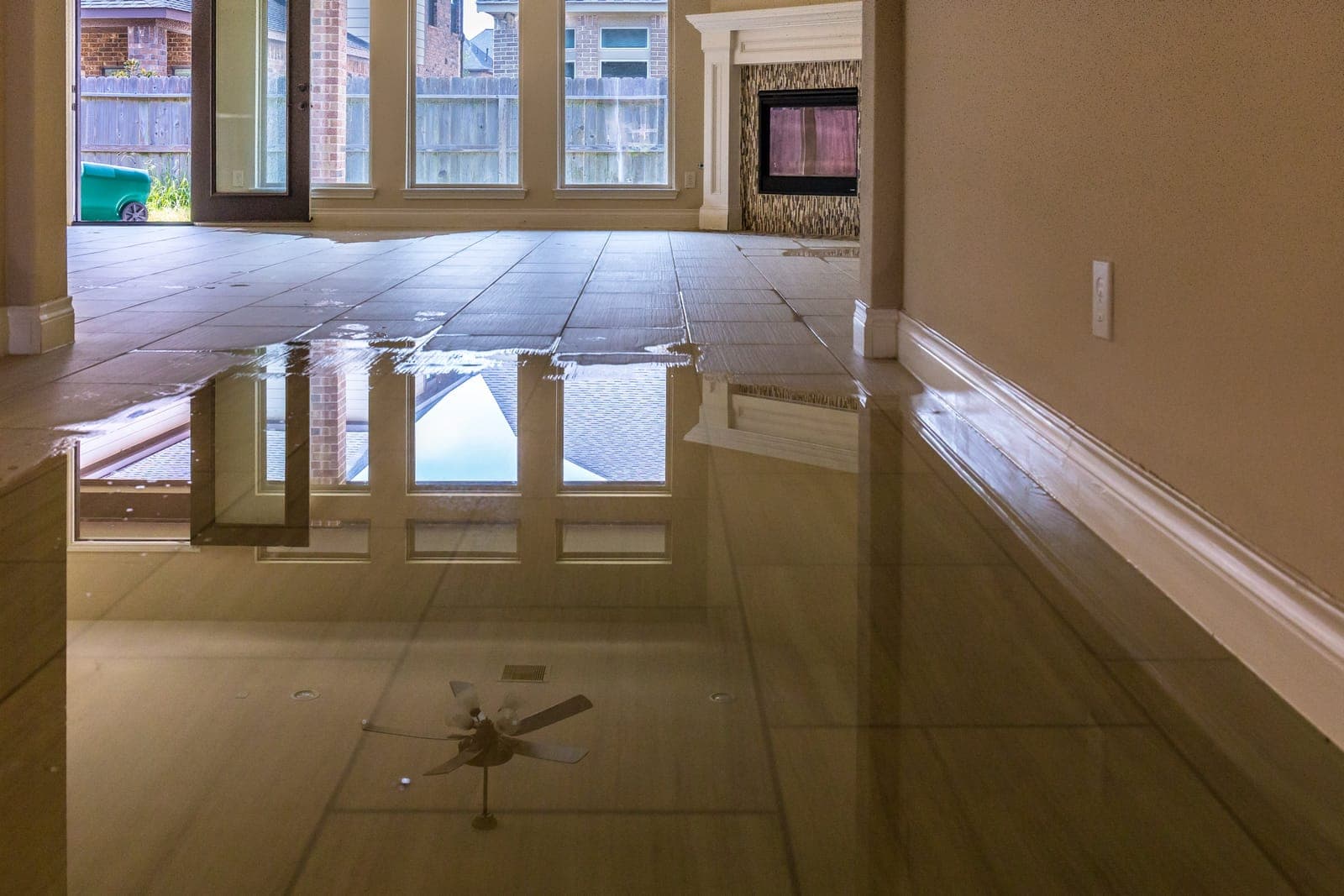
Understanding exclusions is just as important as knowing what is covered. According to Begin Insurance, standard policies typically exclude:
- Overland flooding and sewer backup (requires optional add-ons -- critical in Edmonton)
- Earthquake damage (requires a separate rider)
- Roommates' belongings (unless they are immediate family on the same policy)
- Business equipment (home business inventory requires separate commercial coverage)
- Motor vehicles (covered under auto insurance)
- Gradual or long-term water damage (slow leaks you failed to address)
- Damage from negligence or intentional acts
- Pest damage (rodents, insects, bed bugs)
- Structural damage to the building (the landlord's responsibility)
The flood exclusion deserves special attention in Edmonton. Rates.ca notes that "no tenant policy includes flood protection" by default, and that in Edmonton, "changing weather patterns increase risk from North Saskatchewan River." Premiums are already higher in postal codes closer to the river. If you live in a basement suite or a flood-prone area, adding overland water and sewer backup endorsements is strongly recommended.
What It Costs in Edmonton
Tenant insurance in Edmonton is among the most affordable forms of insurance available. According to Rates.ca's Insuramap data, the average annual premium in Edmonton is $217 (approximately $18 per month). APOLLO Insurance puts the Alberta-wide range at $20 to $40 per month, depending on coverage amounts and risk factors.
Premiums by Edmonton Neighbourhood
Rates vary meaningfully across the city. Here are average annual premiums by postal code area, based on Rates.ca 2021 Insuramap data:
| Area | Postal Code | Avg. Annual Premium | Approx. Monthly |
|---|---|---|---|
| Lewis Estates / West | T6Y | $240 | $20 |
| North Edmonton | T5L | $237 | $20 |
| West Jasper Place | T5P | $236 | $20 |
| Calder / Kensington | T5W | $236 | $20 |
| Clareview / Northeast | T5A | $228 | $19 |
| Bonnie Doon / Strathcona | T6C | $224 | $19 |
| Downtown / Oliver | T5J | $223 | $19 |
| University / Garneau | T6G | $217 | $18 |
| Southgate / Blue Quill | T6H | $215 | $18 |
| Mill Woods | T6K | $209 | $17 |
| Terwillegar | T6R | $210 | $18 |
| Southeast Edmonton | T6T | $199 | $17 |
The most expensive areas tend to be in north and west Edmonton (T6Y, T5L, T5P), while the most affordable are in the southeast (T6T at $199/year). The primary cost driver is flood risk -- areas closer to the North Saskatchewan River or with older infrastructure tend to have higher premiums.
Factors That Affect Your Premium
According to Rates.ca, the key factors include:
- Location and flood risk -- the biggest factor in Edmonton
- Claims history -- previous claims increase premiums
- Dwelling type -- newer buildings may qualify for lower rates
- Coverage amount -- higher contents or liability limits cost more
- Deductible -- a higher deductible lowers your premium
- Special items -- riders for jewelry, art, or specialty equipment increase cost
- Bundling -- combining tenant and auto insurance can save approximately 15 percent
Can Your Landlord Require Tenant Insurance?
Yes. According to Ron Johnston Insurance, "Alberta's Residential Tenancies Act lets landlords add any reasonable condition, including tenant insurance. Breach of that promise is a default and can justify ending the tenancy."
The key points for Alberta renters:
- Tenant insurance is not required by provincial law, but landlords can include it as a lease condition.
- Once you sign a lease with an insurance clause, it becomes a contractual obligation.
- Failure to maintain the required insurance can be treated as a lease default, similar to unpaid rent.
- The province does not set a minimum coverage amount, but most landlords require at least $1 million in liability (many now require $2 million).
- Landlords can ask for proof of insurance at any time.
Most purpose-built rental buildings in Edmonton now require tenant insurance as a standard lease term. If your lease requires it and you do not comply, your landlord has grounds to issue notice.
Best Tenant Insurance Providers for Edmonton Renters
Based on reviews, pricing, and availability in Alberta, here are the most recommended providers:
Square One Insurance
Square One is frequently recommended by Edmonton renters on Reddit for its competitive pricing and customizable coverage. Policies start at approximately $15 per month. As noted by Newcomer Setup's 2026 review, Square One is "a Canadian digital insurer" offering "customizable home and tenant insurance" in Alberta. A key advantage: they do not automatically increase your coverage (and premium) each year.
APOLLO Insurance
APOLLO advertises tenant insurance starting at $13 per month with a "Best Price Guarantee." They offer fully online purchasing and a straightforward claims process. APOLLO is a strong option for Edmonton renters who want quick, no-hassle digital coverage.
Intact Insurance
Canada's largest property and casualty insurer, Intact offers comprehensive tenant insurance through brokers. Reddit users report paying approximately $25 per month for a policy with $30,000 in contents coverage and $1 million in liability. Intact is a good choice for renters who prefer working with a local broker.
Cooperators
The Cooperators have a strong presence in Alberta with local agents across Edmonton. They offer standard tenant insurance packages and are known for responsive claims handling.
Bank-Based Insurance
Several major banks (TD, RBC, BMO) offer tenant insurance, often with discounts for existing banking customers. Premiums typically range from $15 to $25 per month. These are convenient but may offer less flexibility than dedicated insurers.
How to Choose the Right Coverage
Step 1: Inventory Your Belongings
Before purchasing a policy, do a quick inventory of what you own and estimate replacement costs. Walk through each room and add up what it would cost to replace everything new. Most Edmonton renters find their belongings are worth $20,000 to $50,000.
Step 2: Choose Your Liability Limit
If your lease specifies a minimum (usually $1 million or $2 million), start there. If not, $1 million is the standard recommendation. The cost difference between $1 million and $2 million in liability is typically only a few dollars per month.
Step 3: Decide on Replacement Cost vs. Actual Cash Value
Replacement cost policies pay what it costs to buy a new equivalent item. Actual cash value policies deduct depreciation. Replacement cost costs slightly more but pays significantly more at claim time. Choose replacement cost.
Step 4: Add Flood and Sewer Backup Coverage
This is not optional in Edmonton. Standard policies exclude overland flooding and sewer backup. Given the city's flood risk, especially in lower-lying areas and basement suites, adding these endorsements is essential.
Step 5: Compare Quotes
Use comparison tools like Rates.ca or Ratehub.ca to compare multiple providers at once. Shoppers in Alberta who compared on Rates.ca saved an average of $86 per year.
Step 6: Bundle If Possible
If you have auto insurance, bundling your tenant and auto policies with the same provider can save approximately 15 percent on both, according to Ron Johnston Insurance.
Filing a Claim: What to Expect
If you need to make a claim:
- Document everything immediately. Take photos and videos of damage before cleaning up.
- Contact your insurer as soon as possible. Most providers have 24/7 claims lines.
- File a police report if theft or vandalism is involved.
- Keep receipts for any emergency expenses (hotel, meals, replacement essentials).
- Do not discard damaged items until your adjuster has reviewed them.
- Provide your inventory list and any supporting documentation (receipts, photos of items).
Claims processing time varies by insurer and complexity, but straightforward claims (theft, minor water damage) are often settled within two to four weeks.
Sources
- Rates.ca: Edmonton Tenant Insurance Comparison
- APOLLO Insurance: What Does Tenant Insurance Cover in Alberta
- APOLLO Insurance: Average Cost of Tenant Insurance in Alberta
- APOLLO Insurance: Real-Life Fire Claims
- APOLLO Insurance: Is Renters Insurance Mandatory in Alberta
- Ron Johnston Insurance: Can a Landlord Require Tenant Insurance
- Begin Insurance: What Personal Items Are Covered Under Tenant Insurance
- Young and Haggis Insurance: Alberta Tenant's Insurance
- Ratehub.ca: Compare Tenant Insurance Quotes
- Square One Insurance Review 2026 (Newcomer Setup)
- Inflation Calculator: Square One Insurance Review 2026
- Reddit r/Edmonton: Tenant Insurance Recommendations
- Reddit r/PersonalFinanceCanada: Alberta Landlord Insurance Requirements