Parking and Transportation for Edmonton Renters: 2026 Guide to Stalls, Transit Passes, and Car-Free Living
From Open Option Parking to $102 Arc Card monthly caps and the Valley Line West countdown, here is how to think about parking, transit, and the true cost of getting around from your Edmonton rental in 2026.
Parking used to be bundled invisibly into the rent on almost every Edmonton apartment. In 2026, after the city became the first major Canadian municipality to eliminate parking minimums, stalls are priced, unbundled, and often optional. At the same time, the Arc Card now caps monthly transit costs at $102 and the Valley Line West LRT is on track to open before the end of the decade. The result is that where you rent and how you get around are more intertwined, and more negotiable, than ever.
Key takeaways
- Edmonton removed all minimum parking requirements through Open Option Parking in 2020, and Zoning Bylaw 20001 (in force since January 2024) continues that framework, so new rental buildings can provide zero stalls if the developer chooses (City of Edmonton, Deviate Design).
- The 2026 Arc Card adult monthly fare cap for ETS (Edmonton Transit Service) is $102, with a pay-as-you-go 90-minute fare of $3 and a daily cap of $10.50 (City of Edmonton ETS Fares).
- Low-income riders can earn a free annual pass (income below $31,906) or a $140 annual pass (income $31,906–$35,097), making transit one of the cheapest ways to get around the city (City of Edmonton ETS Fares).
- A dedicated parking stall in downtown and Oliver buildings typically adds $125–$225 per month to rent, with titled stalls in premium towers running higher; underground heated stalls carry a meaningful premium in winter (City of Edmonton ETS Fares, internal pricing data from earlier posts in this series).
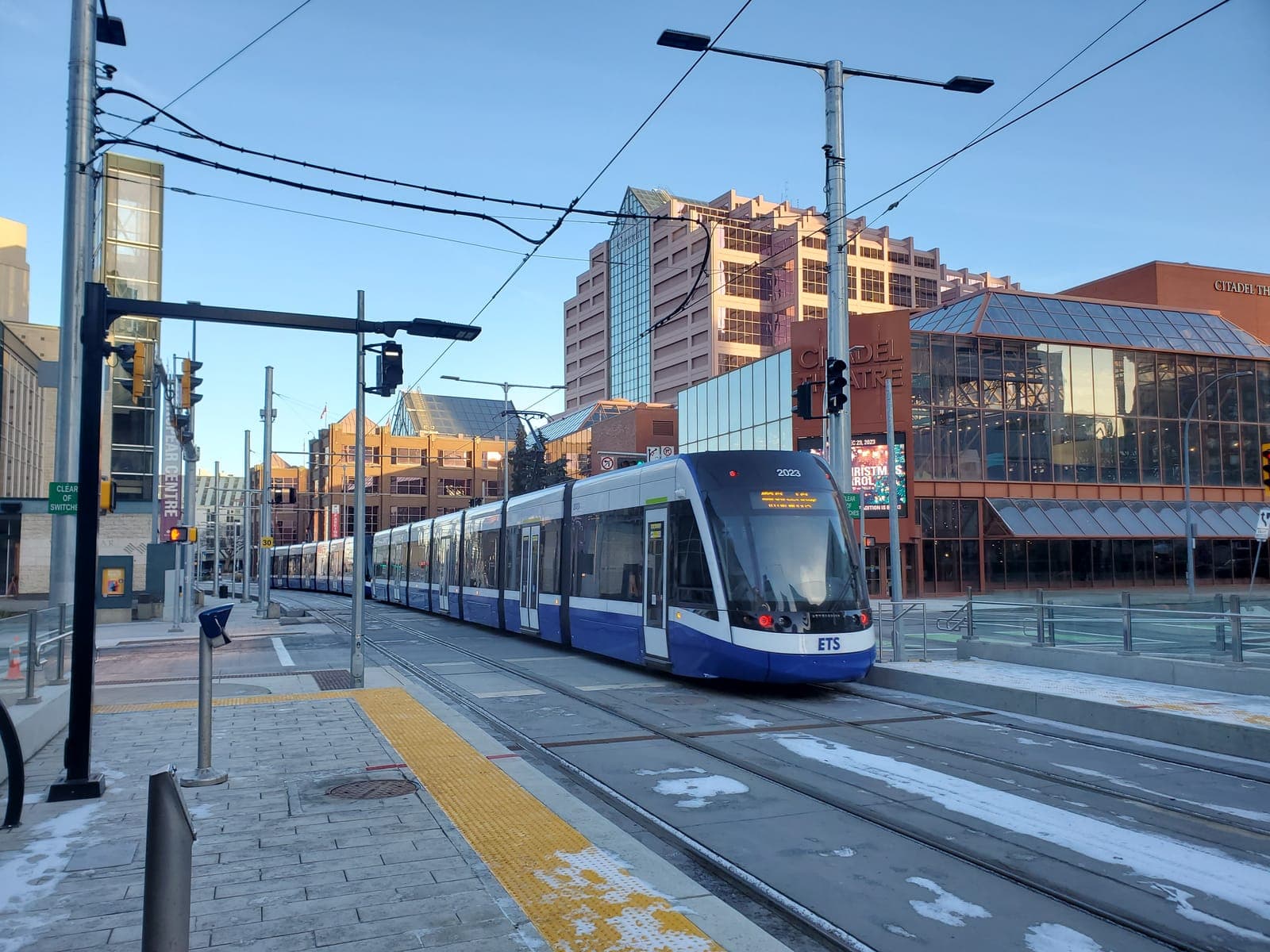
- The Valley Line West LRT (14 km from downtown to Lewis Farms) is scheduled for construction completion in 2028, with testing before opening; corridor rental demand is already shifting (City of Edmonton, Marigold Infrastructure Partners).
How parking actually works in Edmonton rentals in 2026
Open Option Parking: what changed
Before July 2020, Edmonton — like almost every North American city — required minimum parking per unit for every new multi-family building. Open Option Parking removed those minimums and handed the decision back to owners and the market (City of Edmonton, Deviate Design). Under Zoning Bylaw 20001, that framework carried forward in 2024.
For renters, the practical effects are:
- New infill, mid-rise, and high-rise buildings choose how many stalls to build based on their own demand studies. Transit-oriented buildings along the Capital Line, Metro Line, and Valley Line Southeast routinely build fewer stalls than units.
- Parking is almost always unbundled in new buildings. You pay a separate monthly rent for a stall.
- Older walk-ups and suburban garden-style buildings still typically bundle a surface stall with each suite.
- Condo rentals vary widely; titled stalls are an asset of the unit and come with the lease, while assigned-use stalls may be rented by the landlord separately.
Typical 2026 Edmonton stall pricing
The going rates for renter stalls depend heavily on location and type:
| Stall type | Monthly rent range | Where |
|---|---|---|
| Surface, uncovered | $75–$125 | Suburban garden-style, older walk-ups |
| Surface, covered | $100–$150 | Mature neighbourhood apartments |
| Underground, unheated | $125–$175 | Mid-rise rentals outside the core |
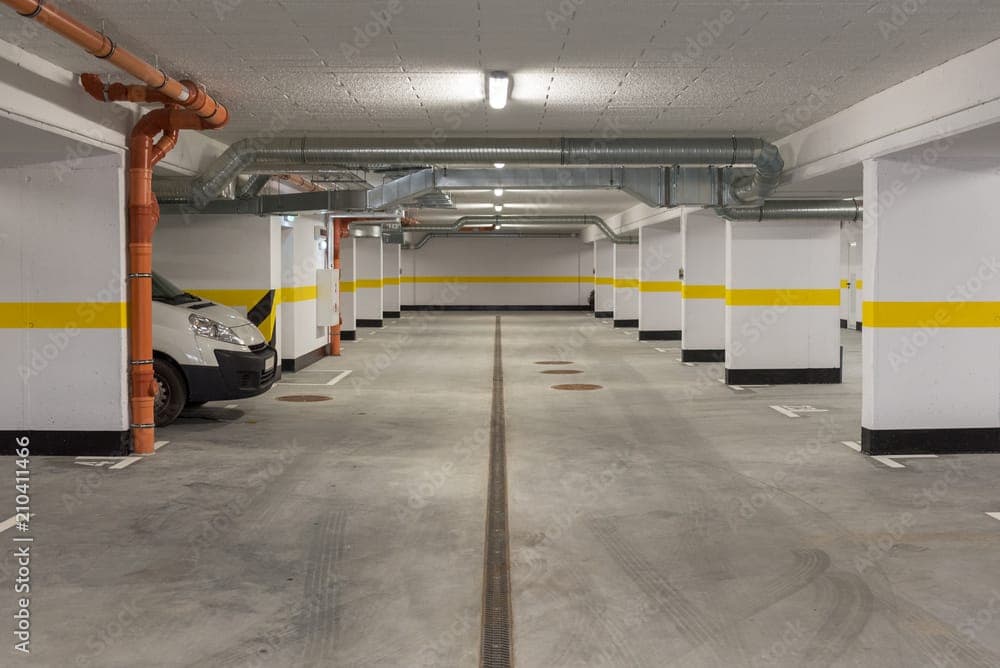
| Underground, heated | $150–$250 | Downtown, Oliver, 124 Street, Strathearn |
| Tandem/heated titled | $200–$300 | Premium towers, condo rentals |
These are ranges reported by Edmonton operators and corroborated in this blog's prior coverage of the luxury rental and new construction rental segments. For budgeting, a reasonable assumption is $150/month for a heated, underground stall in a new building.
Centre City temporary parking is sunsetting
Surface parking lots in the downtown core, created under the Centre City Temporary Parking zoning provisions, are being wound down. Under Bylaw 20001, no new Development Permits for Centre City Temporary Parking can be issued after June 30, 2026 (City of Edmonton Zoning Bylaw 6.120). That accelerates the conversion of surface lots into housing, retail, and structured parking, and will likely tighten on-street and monthly commercial parking availability downtown as older lots are redeveloped.
The cost of transit in 2026
Edmonton has been rolling out Arc — a regional tap-to-pay smart card shared with St. Albert Transit, Strathcona County Transit, Beaumont Transit, Fort Saskatchewan Transit, Leduc Transit, and Spruce Grove Transit. For ETS specifically, 2026 fares are (City of Edmonton ETS Fares):
- Arc Card pay-as-you-go 90 minutes: $3.00
- Arc Card daily fare cap: $10.50
- Arc Card monthly fare cap (adult): $102
- Arc Card monthly fare cap (senior): $36
- Arc Card monthly fare cap (youth): $66
- Arc Card annual fare cap (regular/senior): $396
The monthly fare cap is the important innovation. You tap your card each ride at $3 until you hit $102 in a calendar month, after which you ride free for the rest of the month. That is effectively a price ceiling on commuting costs, even if you only need occasional transit trips in some months.
Low-income and subsidized passes
Edmonton's Ride Transit Program remains one of the cheapest transit subsidies in Canada (City of Edmonton ETS Fares):
- Annual Pass — income between $31,906 and $35,097: $140 per year (about $11.67/month).
- Annual Pass — income below $31,906: free.
- Post-secondary U-Pass: negotiated directly by student unions and embedded in tuition at University of Alberta, MacEwan, NorQuest, and NAIT.
If you qualify, the Ride Transit subsidy is the single biggest monthly cost-of-living lever available to renters in Edmonton — it can shift your transportation budget by $80–$100 per month compared to the adult cap.
The LRT pipeline that is shifting rental demand
Valley Line Southeast (open since 2023)
The 13 km Valley Line Southeast runs from downtown to Mill Woods, with stops at Muttart, Strathearn, Davies, Grey Nuns, Millbourne/Woodvale, Mill Woods Town Centre, and Century Park. Since opening, rental demand along the corridor has quietly strengthened, especially in Strathearn — now anchoring a 1,900-unit purpose-built rental redevelopment — and in Mill Woods, where new federally financed rentals are opening in 2026.
Valley Line West (under construction)
The 14 km Valley Line West extends the line from downtown to Lewis Farms, with 14 stops across Jasper Avenue, Stony Plain Road, 156 Street, Misericordia, Meadowlark, West Edmonton Mall, and Lewis Farms. Construction is anticipated to be complete in 2028, followed by testing before opening (City of Edmonton, Marigold Infrastructure Partners). The first light rail vehicle arrived in Edmonton in 2025 and major bridge and intersection work is continuing through 2026 along the alignment (Railway Age, Instagram — Marigold Infrastructure Partners).
For renters, the practical signal is that units within a five-minute walk of future West stations — particularly around 149 Street, Meadowlark, and West Edmonton Mall — are likely to see rent appreciation in the 2027–2029 window. Renewing a two-year lease now at a moderate rate near a future station often beats chasing the market once the line opens.
Capital and Metro Lines
The existing Capital Line (from Century Park to Clareview) and the Metro Line (to NAIT) continue to anchor strong rental demand near Health Sciences, University, Grandin, Churchill, Stadium, Belvedere, and NAIT stations. These corridors already price in the LRT advantage, but the monthly Arc Card cap makes them a compelling value for students and hospital staff who rent along them.
The true monthly cost of getting around
For a renter choosing between two apartments, the fairest comparison is the total cost of housing and transportation — not rent alone. Here is a realistic 2026 comparison for a downtown office worker:
| Scenario | Rent | Parking | Transit pass | Fuel/insurance/depreciation (est.) | Monthly total |
|---|---|---|---|---|---|
| Downtown one-bedroom, car-free | $1,500 | $0 | $102 | $0 | $1,602 |
| Downtown one-bedroom with heated stall | $1,500 | $175 | $0 | $550 | $2,225 |
| Suburban one-bedroom with free surface stall | $1,300 | $0 | $0 | $650 | $1,950 |
| Suburban one-bedroom, transit-only | $1,300 | $0 | $102 | $0 | $1,402 |
The comparison makes two things obvious. First, the car-free suburban scenario is usually the cheapest option on paper, provided it pairs with a walkable neighbourhood and reliable LRT or bus service. Second, the assumption that a cheaper suburban rent automatically beats a downtown rent is often wrong once parking and driving costs are added back in.
The $550–$650 monthly car-cost estimate blends average Edmonton gas, maintenance, insurance, and depreciation for a 10-year-old sedan driven ~15,000 km/year; heavier drivers or newer vehicles will exceed that.
Cycling and micromobility in 2026
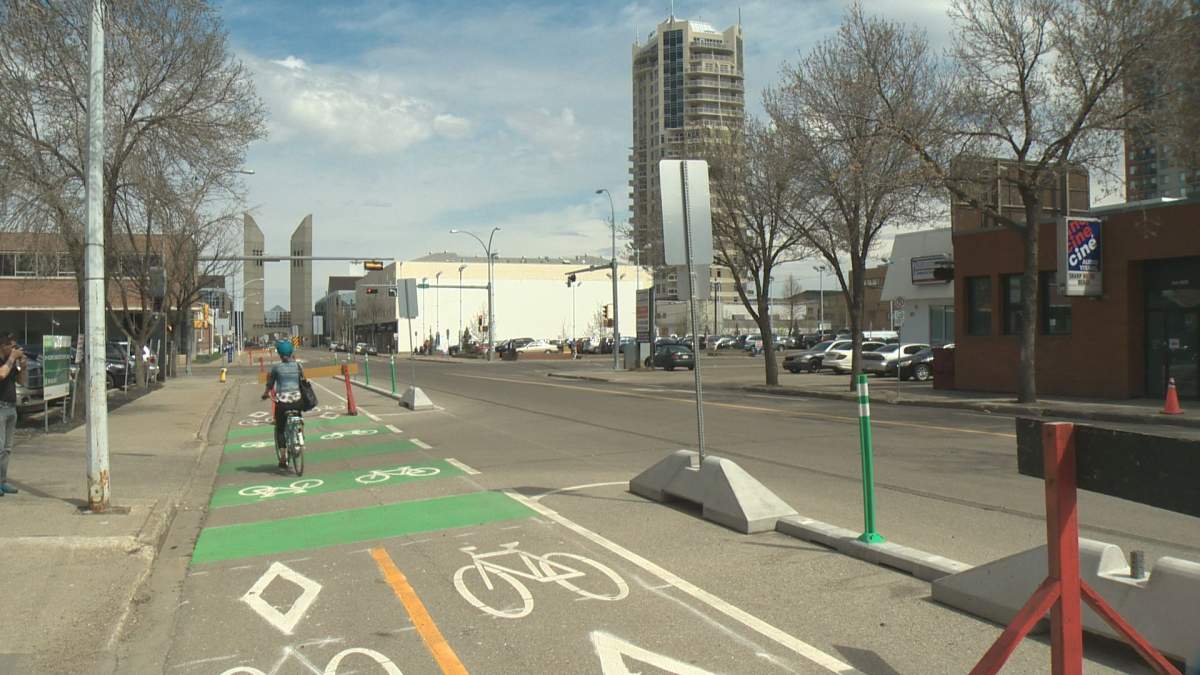
Edmonton's downtown bike network now provides protected lanes along major streets including 100, 102, 103, 105, and 107 Avenues, and along Jasper Avenue. Whyte Avenue has protected lanes east and west of the core, and the River Valley trail system offers a year-round option for cyclists using studded tires and e-bikes. Strathcona's Bike Plan, developed by Bike Edmonton, continues to add district-connector segments each year (Bike Edmonton).
For renters, the practical opportunity is that a $1,500 quality e-bike — increasingly common — can eliminate a second car in a two-earner household. Edmonton's Arc Card also allows bike and scooter combinations: bring your bike on the LRT outside peak hours and on most bus routes with front-loaded bike racks.
Practical step-by-step: choosing your Edmonton rental around transportation
- Start with your weekly pattern. Where do you work, study, get groceries, and socialize? Map those on the City of Edmonton transit map and see which LRT or frequent-bus line connects them.
- Pick two shortlist neighbourhoods. Downtown, Oliver, Strathcona, Garneau, Hardisty, Strathearn, Capilano, Bonnie Doon, NAIT, Belvedere, Century Park, Mill Woods Town Centre, Grovenor/Meadowlark, and West Edmonton Mall areas are all well-served by rapid transit.
- Calculate total housing + transport cost for each candidate using the table approach above. Use Edmonton's Arc Card cap of $102 as the transit input if you will commute most weekdays.
- Negotiate parking out if you do not need it. In new buildings, ask the landlord to waive the stall line item entirely — many will rather than leave it vacant.
- Negotiate transit in. Some Edmonton operators now offer a "new resident" transit credit or reimburse the first month of an Arc Card to encourage car-free households; it does not hurt to ask.
- Check the Valley Line West alignment. If you are committing to a two- or three-year lease west of downtown, a unit within a five-minute walk of a future station will almost certainly be worth more in 2028 than in 2026.
- Read the parking clause carefully. Stalls are usually month-to-month rather than for the lease term, which means the landlord can raise the stall rent independently. Clarify whether stall rent is locked for the lease term.
- Bundle your Arc Card with Epcor MyAccount autopay. Transit passes paid through autopay are rarely missed, and the fare cap means you never overpay.
For landlords: Stop thinking about stalls as free
With Open Option Parking in place, the most common operator mistake is continuing to bundle parking into rent as if it were free. Unbundling achieves three things:
- Clearer price signals: renters who do not drive pay less; renters who do drive pay the real cost.
- Higher effective rent: a $1,500 rent plus $175 parking is more defensible than a $1,675 all-in rent when comp sets unbundle.
- Flexibility at lease-up: you can concede the stall line item rather than the rent line item, preserving your rent comp for renewal pricing.
For new buildings pursuing MLI Select financing, supporting transit access and car-free tenants also improves the social-outcome narrative with CMHC, indirectly strengthening underwriting.
Bottom line
Edmonton's transportation math in 2026 is unusually renter-friendly. Parking minimums are gone, transit fares are capped at $102 a month, the low-income pass is free or nearly free, the Valley Line West is on the way, and the downtown bike network keeps expanding. The renters who benefit most are the ones who treat rent, parking, and transit as a single budget line — because in 2026, they are. Unbundling the decisions means you can trade a parking stall for a better apartment, or a longer commute for a shorter one, without getting trapped in the old assumption that every rental comes with a free car.
Sources
- City of Edmonton — Open Option Parking
- Deviate Design Inc. — Ending Edmonton's Parking Minimums
- City of Edmonton — ETS Fares and Passes (2026)
- MyArc.ca — Arc Ticket Prices (2026)
- City of Edmonton — Valley Line West LRT
- Marigold Infrastructure Partners — 2026 Look Ahead: Valley Line West LRT
- Railway Age — First Edmonton Valley Line West LRV Arrives
- City of Edmonton Zoning Bylaw — 6.120 Centre City Temporary Parking
- Bike Edmonton
- Reasons to be Cheerful — Edmonton's New Parking Rule