Green and Energy-Efficient Rentals in Edmonton: 2026 Guide to Lower Bills, Greener Buildings, and EnerGuide-Smart Renting
Edmonton has billions of dollars flowing into energy-efficient rental construction and retrofits. Here is how to spot a high-performance building, what utility savings are realistic, and which incentives apply to renters and landlords in 2026.
Edmonton's rental stock is going green faster than any other Prairie city. Federally subsidized energy-efficient construction is being built into the largest rental pipeline in a generation, HomeEd is finishing a $22.5 million retrofit of nearly 1,100 affordable units, and the City's Clean Energy Improvement Program is now financing both single-family and multi-unit residential building (MURB) retrofits at fixed long-term rates (HomeEd, City of Edmonton CEIP). For a renter making a 12-month lease decision in 2026, the energy efficiency of the building you choose can quietly save you $500 to $1,500 a year.
Key takeaways
- HomeEd is investing $22.5 million to retrofit 16 affordable buildings (nearly 1,100 units) for a 25% reduction in energy use, with completion targeted for the end of 2025 and tenants seeing the benefit at no extra cost (HomeEd).
- New Edmonton purpose-built rentals financed under CMHC's MLI Select program must be at least 20% better than the National Energy Code (Level 1) and earn major incentives at 25% and 40% better than code, including amortizations up to 50 years (CMHC, Buildingexpert).
- The Clean Energy Improvement Program (CEIP) lets MURB owners finance $3,000 to $50,000 of energy retrofits per residential unit at fixed long-term rates, repaid through the property tax bill over up to 20 years (City of Edmonton).
- Multifamily energy retrofits typically cut tenants' annual electricity bills by $220 to $500 per unit and reduce overall energy use 18%–29%, according to a peer-reviewed multifamily retrofit study (MacArthur Foundation).
- Edmonton needs to retrofit roughly 12,260 homes a year to hit the City's 2050 climate targets, which means policy support for green retrofits is structural, not temporary (Alberta Ecotrust Foundation).
Why energy efficiency matters more in Edmonton than almost anywhere else
Edmonton sits in Climate Zone 7A, with January design temperatures around minus 30 degrees Celsius and a heating season that runs from October through April. Heating is the single biggest household energy cost in the city — typically 50%–60% of a household's energy use — and the natural gas and electricity rates that drive utility bills have been volatile through 2024 and 2025. That means the difference between a leaky 1970s walk-up and a 2024 MLI Select apartment can be the difference between a $180/month winter electricity-and-gas bill and a $90/month one.
Renters often think of utilities as a pass-through cost, but in Edmonton it is one of the largest controllable line items in the rental decision. According to Power Properties' 2026 Edmonton tenant survey, energy-efficient appliances and smart thermostats are now among the most-requested in-suite amenities, ahead of in-suite laundry in many segments, because they directly translate to lower bills (Power Properties).
What "green rental" actually means in 2026
In Edmonton, four overlapping certifications and standards shape what counts as an energy-efficient rental.
EnerGuide for Houses
Used for low-rise housing — single-family, duplexes, and small infill rentals. An EnerGuide rating expresses a home's annual energy use in gigajoules per year. Lower is better. After a retrofit, a typical Edmonton bungalow can move from 130 GJ/year to 85 GJ/year, a 35% reduction. Rental landlords pursuing the City's net-zero retrofit incentives must complete a pre- and post-retrofit EnerGuide evaluation through a Natural Resources Canada Energy Advisor (NRCan, Alberta Ecotrust Foundation).
National Energy Code for Buildings (NECB)
Used for new mid-rise and high-rise rental buildings. A purpose-built rental is "code-compliant" if it meets the 2020 NECB. Under MLI Select, builders earn incentives by exceeding it (Buildingexpert):
- Level 1 (20 points): at least 20% better than NECB.
- Level 2 (35 points): at least 25% better.
- Level 3 (50 points): at least 40% better.
For renters, NECB performance is what is doing the heavy lifting in new buildings — better insulation, better windows, lower air leakage, more efficient HVAC.
MLI Select energy commitments
Federal mortgage loan insurance is now the largest engine of green rental construction in Canada, and most Edmonton purpose-built rentals built or refinanced since 2024 are operating under it. MLI Select awards points for affordability, energy efficiency, and accessibility, and it requires the more aggressive commitments to qualify for premium financing terms (CMHC MLI Select, EnerSolution). New buildings can stretch amortizations to 50 years and reduce premiums significantly when they hit Level 2 or 3 — a powerful incentive that has reshaped what gets built.
Voluntary green building certifications
Some Edmonton developers go further and pursue LEED, Built Green Canada, or ENERGY STAR Multifamily High-Rise certification. These are useful tiebreakers when comparing two new buildings, but the underlying NECB performance is what most directly drives your monthly bill.
The most important Edmonton-specific projects and programs
HomeEd's $22.5 million energy retrofit
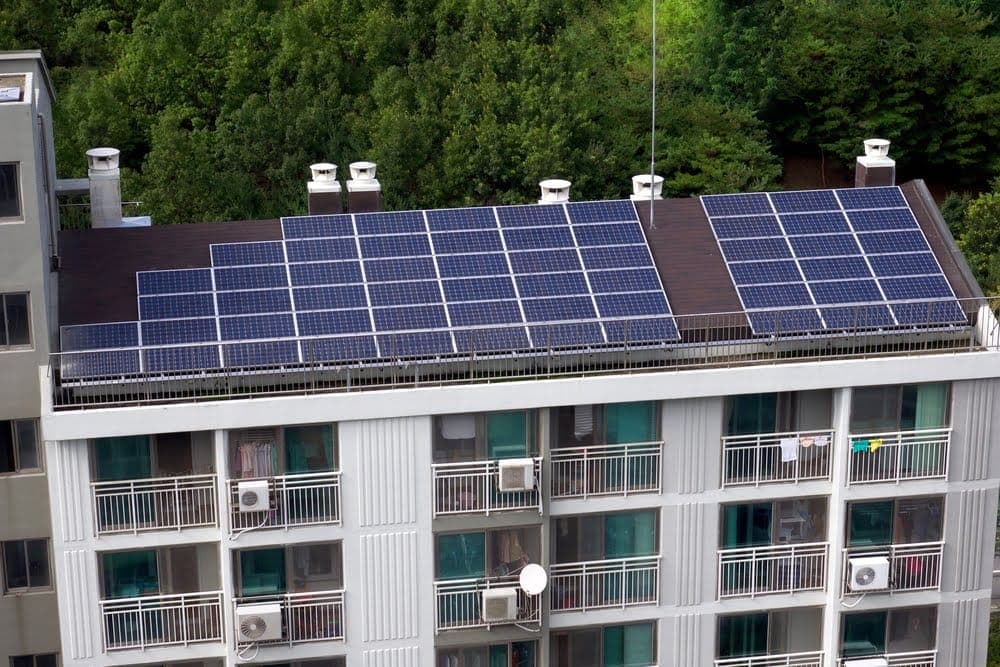
The City of Edmonton's non-profit housing corporation is finishing one of the largest single-portfolio retrofit projects in the city's history: 16 properties, nearly 1,100 affordable units, with upgrades including solar arrays, attic insulation, high-efficiency boilers and hot water tanks, LED lighting, low-flow fixtures, and high-efficiency appliances. Target: a 25% reduction in energy consumption, completed by year-end 2025, with no rent increase to tenants (HomeEd). For renters seeking subsidized housing, an HomeEd-managed building is now a credibly greener option than equivalent private older stock.
Clean Energy Improvement Program (CEIP)
Edmonton's CEIP is one of Canada's most flexible Property-Assessed Clean Energy (PACE) programs (City of Edmonton):
- Residential and MURB owners can finance $3,000 to $50,000 in retrofits per property; non-residential up to $1 million.
- Repayment is up to 20 years (or the upgrade's effective useful life), through the property tax bill, with fixed long-term interest rates and no penalty for early repayment.
- Eligible upgrades: solar PV and thermal, HVAC, windows and doors, insulation, water heating, lighting, and custom upgrades.
- A pre-retrofit EnerGuide or qualifying assessment is required, and at least three upgrades must be installed for residential properties (unless reaching net zero).
For a basement-suite landlord or a small MURB owner, CEIP is the financing structure that most directly translates to a renter's lower bill.
Home Energy Retrofit Accelerator (HERA)
The City's three-year HERA program offered rebates layered on top of EnerGuide evaluations, with bonuses for net-zero renovations of up to $10,000. The program targeted ~1,200 households and is now fully subscribed for residential homes, but its pipeline has effectively pre-loaded a wave of higher-performance infill rentals that should be hitting the market in 2026 and 2027 (Alberta Ecotrust Foundation).
EPCOR's energy-saving guidance
Edmonton's electricity and water utility, EPCOR, also provides curated guidance for net-zero retrofits, including pointers to the Canada Greener Homes Loan, an interest-free loan up to $40,000 with 10-year repayment that funds insulation, windows, doors, heat pumps and solar panels (EPCOR). Renters cannot apply directly, but it is a useful program for landlord conversations about retrofits and eventual rent stability.
What utility savings can a renter actually expect
The single best peer-reviewed dataset on multifamily retrofits comes from a four-property study analyzed by the MacArthur Foundation. Across 232 units, energy efficiency upgrades delivered (MacArthur Foundation):
- Average annual electricity savings of 1,700–3,811 kWh per unit (18%–29% reduction).
- Tenant utility bill savings of $220–$500 per unit per year.
- Aggregate utility bill savings of $10,000–$27,500 per property per year.
Edmonton's heating-dominated climate skews savings toward gas as well as power, so a fully retrofitted Edmonton suite can realistically reach the higher end of that range — particularly two-bedroom units in older walk-ups that get insulation, window, and HVAC upgrades.
For a renter weighing two new buildings, here is a useful rule of thumb: an MLI Select Level 2 or Level 3 building (25%–40% better than NECB) should consume 20%–35% less energy than a code-built equivalent. On a $180 monthly winter heat-and-power bill, that is $36–$63 a month in savings, or roughly $300–$700 per heating season.
How to spot an energy-efficient rental in Edmonton
When touring or shortlisting:
- Ask for the building's NECB or EnerGuide performance. Reputable landlords and property managers should be able to tell you whether a building is built to code, MLI Select Level 1/2/3, or rated under EnerGuide. If they cannot, treat that as a soft negative signal.
- Look for triple-pane windows and continuous exterior insulation. Both are common on new MLI Select projects in Edmonton and rare on stock built before 2018.
- Check for in-suite ENERGY STAR appliances. Fridges, dishwashers, and clothes washers/dryers carrying the ENERGY STAR label cut a meaningful share of in-suite power use.
- Ask about the heating system. Heat pumps (cold-climate-rated for Edmonton's winters), high-efficiency natural gas boilers, and in-suite heat-recovery ventilators (HRVs/ERVs) all signal a more efficient building.
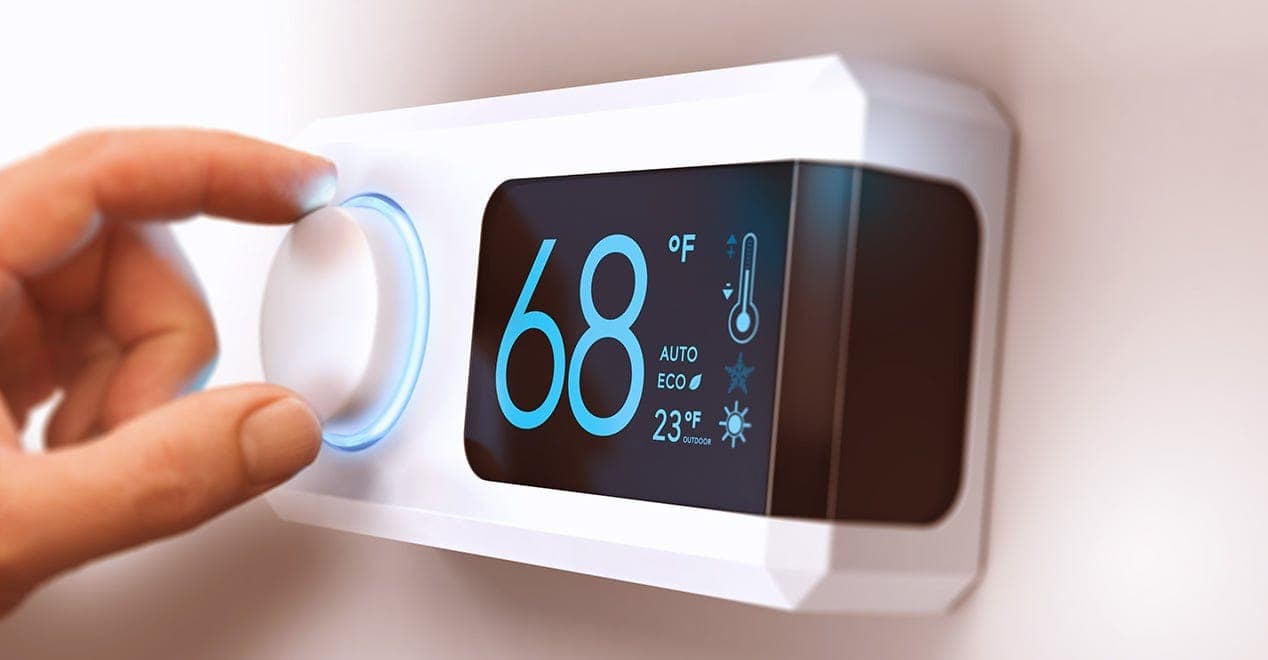
- Ask about smart thermostats. Power Properties' 2026 Edmonton survey lists smart thermostats among the top-requested amenities; a building that has invested in them tends to have invested in other efficiency measures too (Power Properties).
- Look for solar PV on the roof or in the project marketing. New HomeEd retrofits include solar arrays, and several private MLI Select projects do too.
- Ask whether utilities are bundled. Heat and water are often included in mid-rise rents in Edmonton; that bundling masks efficiency from your perspective unless you ask about historical building-wide consumption.
What landlords should be doing in 2026
For Edmonton landlords — especially small-portfolio MURB owners — the policy stack now favours retrofitting:
- Start with an EnerGuide or qualifying energy assessment. That single step unlocks CEIP financing, MLI Select refinancing, and any future federal incentives.
- Stack CEIP and MLI Select where possible. CEIP funds the upfront retrofit work, and MLI Select rewards energy commitments at refinancing with longer amortizations and lower premiums — substantial cash-flow benefits.
- Prioritize the building envelope. Insulation, air sealing, and windows deliver the highest dollar-per-percent savings and dramatically improve tenant comfort, which lowers vacancy.
- Replace heating last, but plan it now. Cold-climate heat pumps are increasingly viable in Edmonton, but the best strategy is to right-size them after envelope upgrades, not before.
- Document and market the upgrades. A clear "energy upgrades since 2024" data sheet is now table stakes for premium leasing in new and renovated Edmonton stock; renters increasingly compare buildings on energy performance and amenities together (Power Properties).
- Watch for new programs. With HERA fully subscribed, the next round of Alberta and federal incentives is likely to focus on heat pumps and deep retrofits of MURBs. Subscribe to City of Edmonton and Alberta Ecotrust Foundation updates.
Practical step-by-step for a renter prioritising green and low utilities
- Filter listings for properties built in 2018 or later, or for buildings that explicitly mention MLI Select, BuiltGreen, LEED, or ENERGY STAR.
- Ask the landlord for the past 12 months of average suite utility bills for a comparable unit. Reputable property managers can provide a range.
- Confirm whether heat, water, and gas are included in rent. If they are not, get the bill range in writing — it is the only way to compare net effective rent across buildings.
- During the showing, look for triple-pane windows, ENERGY STAR appliances, a smart thermostat, low-flow fixtures, and an HRV/ERV vent in the suite.
- If you are renting a basement suite or older walk-up, ask whether the landlord has used CEIP or HERA for upgrades. New windows or a high-efficiency furnace materially affect winter comfort and bills.
- Set up your own ENERGY STAR tracking once you move in — Epcor offers free MyAccount energy use insights, and a basic in-suite smart thermostat ($150–$220 retail) typically pays back inside a year in Edmonton's heating-dominated climate.
- Renew strategically. Buildings that have just completed a retrofit often hold rent at renewal because their operating costs have dropped, even when nearby buildings raise rents.
Bottom line
Edmonton's green rental market is no longer a niche; it is the leading edge of where new supply is being built and where existing supply is being upgraded. Federal and municipal programs — MLI Select, CEIP, HERA, the HomeEd retrofit, EPCOR conservation guidance — have aligned around the same goal of reducing energy use across the city's roughly 350,000 residential buildings. For renters, that translates into real, measurable utility savings in 2026: $300–$700 per heating season is a realistic expectation in a Level 2 or 3 MLI Select building versus a code-built peer, and $220–$500 per year per unit on electricity alone is reasonable in a fully retrofitted older property. For landlords, the financing stack has never been more favourable. Either way, energy efficiency has moved from "nice to have" to a core variable in Edmonton's 2026 rental decision.
Sources
- HomeEd — Energy Retrofits ($22.5M, 1,100 units)
- City of Edmonton — Clean Energy Improvement Program
- City of Edmonton — Home Energy Retrofit Accelerator landing
- Alberta Ecotrust Foundation — Edmonton's Home Energy Retrofit Accelerator program
- CMHC — MLI Select program
- Buildingexpert — MLI Select energy efficiency points (Level 1/2/3)
- EnerSolution — CMHC MLI Select Program overview
- New Homes Alberta — MLI Select Eligibility 2025 Guide
- EPCOR — Achieve Net Zero at Home
- Natural Resources Canada — Pre-retrofit EnerGuide evaluation
- MacArthur Foundation — Cost Savings from Energy Retrofits in Multifamily Buildings (PDF)
- Power Properties — What Renters Really Want in Edmonton: Top Amenities in 2026
- City of Edmonton — Zoning Bylaw 20001 home