Edmonton Rental Prices in 2026: Latest Trends, What They Mean, and What to Do Next
A source-backed snapshot of Edmonton rent levels, demand and supply drivers, and practical actions for renters and landlords.
Edmonton's rental market has entered a new phase in 2026 — one defined not by runaway acceleration, but by a careful balancing act between record-high new supply, cooling demand growth, and pockets of resilient pressure in select unit types and neighbourhoods. For renters, that means real negotiating power for the first time in years. For landlords, it means competing harder and pricing smarter.
This deep-dive, updated to March 30, 2026, draws on the latest CMHC Rental Market Report data, Rentals.ca asking-rent snapshots, liv.rent's February 2026 Calgary and Edmonton Rent Report, Statistics Canada migration data, and the City of Edmonton's own Q4 2025 economic update.
The Numbers at a Glance
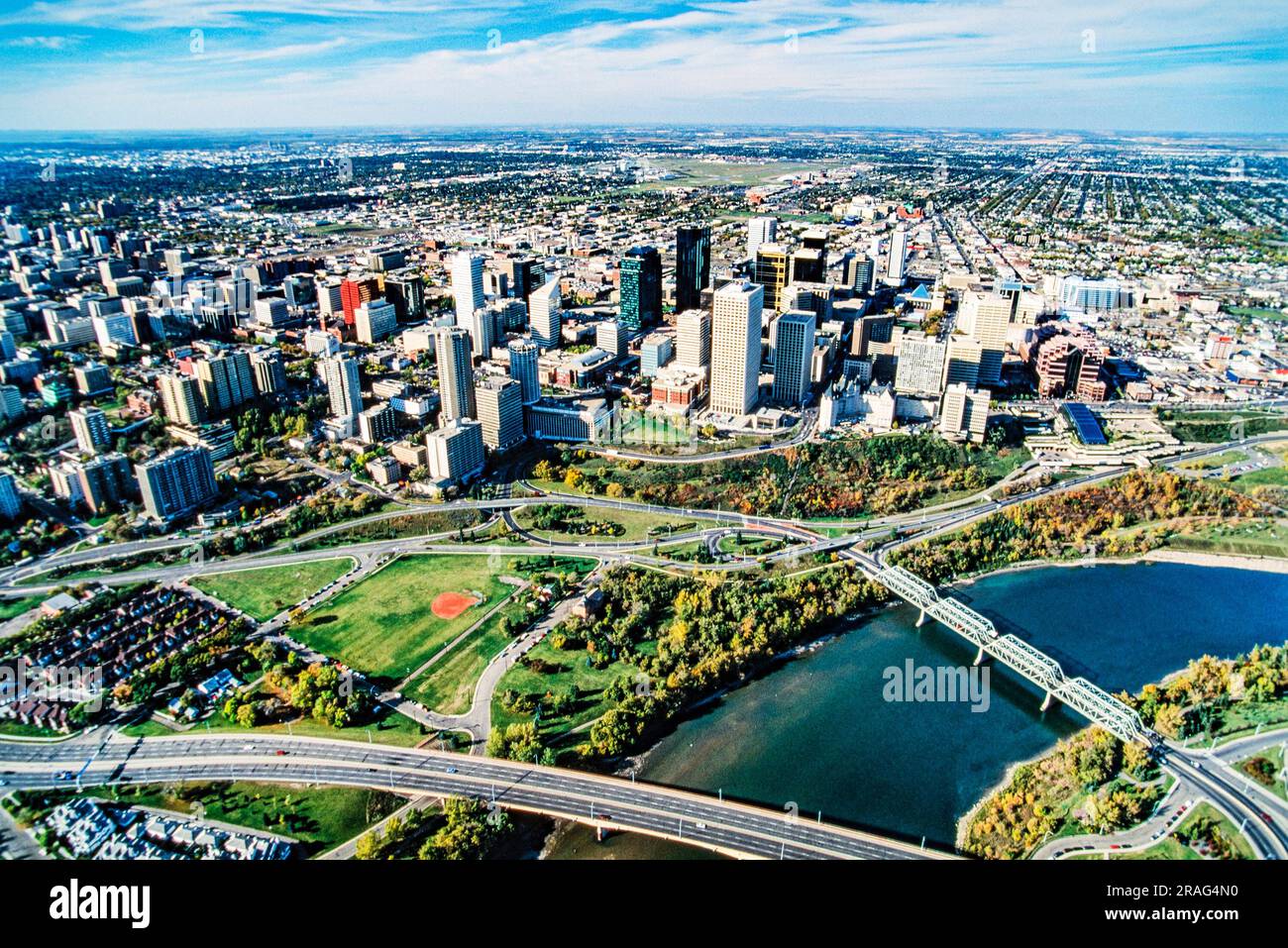 Downtown Edmonton and the North Saskatchewan River valley — the core of the city's rental demand hub.
Before diving into trends and drivers, here is where rents actually sit across the most-cited data sources as of early 2026:
| Unit Type | CMHC 2025 Survey (Purpose-Built) | Rentals.ca Asking Rent (Jan 2026) | Apartments.com Asking Rent (Mar 2026) | liv.rent Asking Rent (Feb 2026, Unfurnished) |
|---|---|---|---|---|
| Studio / Bachelor | $900–$1,000 | ~$1,137 | $1,137 | — |
| 1-Bedroom | $1,100–$1,250 | $1,279 | $1,344 | $1,230 |
| 2-Bedroom | $1,300–$1,500 | ~$1,518 | $1,624 | ~$1,454 |
| 3-Bedroom | $1,500–$1,800 | — | $1,869 | — |
| All units avg | $1,603 (2BR avg) | $1,518 | $1,344 | $1,230 (1BR avg) |
Why the spread? CMHC surveys existing tenants across purpose-built rental stock — including long-tenured renters paying below-market rates. Rentals.ca and liv.rent capture current asking rents on actively listed units, which skew higher. Apartments.com reflects a broader listing pool including condos. None of these numbers is "wrong" — they measure different slices of the same market.
Key headline figures:
- CMHC vacancy rate: 3.8% in October 2025, up from 3.1% in 2024 and 2.4% in 2023
- CMHC average 2-bedroom rent (purpose-built): $1,603, up ~3.5% year-over-year
- CMHC 2-bedroom turnover rent (new leases): $1,600 — essentially at the same level as the portfolio average, suggesting limited turnover premium in Edmonton vs. tighter markets
- Rentals.ca January 2026: Edmonton apartment asking rents at $1,518, up 0.8% year-over-year
- liv.rent February 2026: Edmonton unfurnished 1-bedroom average at $1,230/month, down approximately $150 (–11%) from February 2025
- Alberta-wide: Rentals.ca March 2026 report shows asking rents in Alberta fell 4.6% year-over-year — Edmonton remains one of the stronger performers within the province
The divergence between CMHC's survey-based increase (+3.5%) and the asking-rent datasets (flat to declining) is the single most important signal in this market: existing leases have held up, but new listings are soft and competition for tenants is rising.
Vacancy Rates: The Trend Renters Should Actually Watch
CMHC's vacancy rate is the market's most reliable structural indicator, and Edmonton's trajectory is clearly renter-friendly:
- 2023: 2.4% — tight, limited options
- 2024: 3.1% — beginning to loosen
- 2025: 3.8% — meaningful improvement
- 2026 (CMHC projection): 4.0–5.1% — the most renter-friendly environment since before the pandemic, with a projected peak near 5.1% in 2027
The 3.8% rate confirmed by Taproot Edmonton's coverage of the City of Edmonton's Q4 2025 economic update sits comfortably above the 3% threshold that housing economists generally associate with a balanced market. For context, Calgary's vacancy jumped from 1.4% in 2023 to 4.8% in 2024 after a 10% surge in purpose-built rental stock — Edmonton is on a similar but more gradual trajectory.
Nationally, CMHC's 2025 survey showed the average Canadian vacancy rate rising to 3.1%, up from 2.2% in 2024 and now above the 10-year average. Edmonton's 3.8% places it above the national average, indicating a market with meaningfully more renter choice than most major Canadian cities.
What Is Driving These Trends?
Population Growth: Real, But Slowing
Edmonton's population crossed 1.2 million in 2025, having added more than 187,000 residents since 2021. Alberta led the country in interprovincial migration for a third consecutive year as of mid-2025, adding 6,187 residents through interprovincial moves in Q2 2025 alone. Ontario, Saskatchewan, and B.C. have all been net exporters of people to Alberta, driven by relative affordability in housing ownership and lower cost of living.
However, the pace is slowing. Alberta saw its net interprovincial gain in Q3 2025 decline 44.9% year-over-year. International immigration — which had contributed tens of thousands of new residents annually — also dramatically moderated: only 197 net international immigrants arrived in Alberta in Q3 2025, compared to 32,046 in the same period of 2024. The federal government's immigration policy tightening and reductions in non-permanent resident permits are directly reducing rental demand formation in 2026.
Record New Supply Hitting the Market
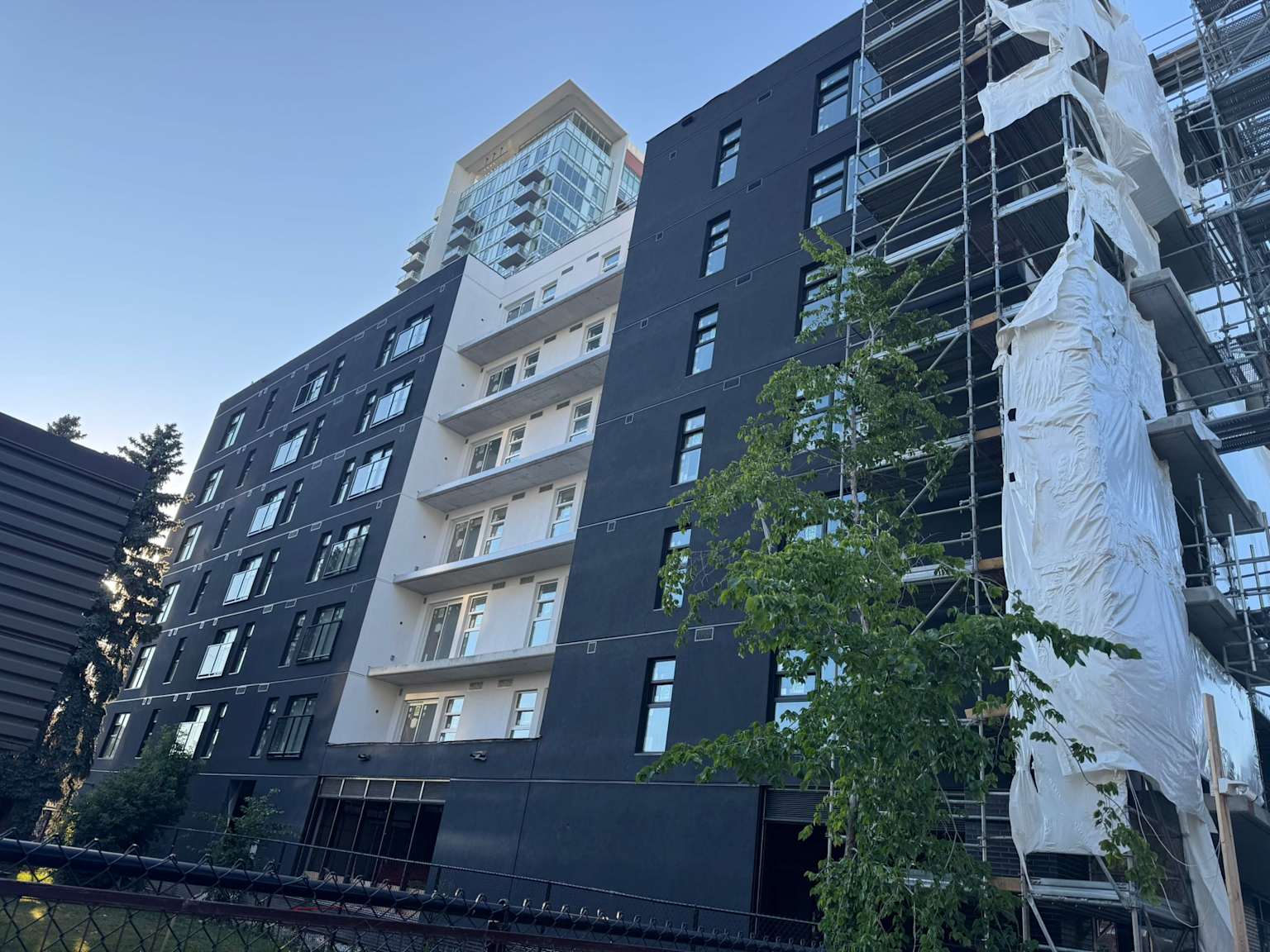 Record rental housing starts in Edmonton in 2025 are now delivering completed units into a market with softening demand.
Edmonton recorded 21,337 housing starts in 2025, up 16% from the prior year, and CMHC's Spring 2026 Housing Supply Report confirmed that rental starts hit record highs in Edmonton in 2025 — the second consecutive record year. Multi-family deliveries surged nearly 60% year-over-year in 2024 and continued at elevated rates through 2025.
Apartment starts were concentrated in Edmonton's South, Core, West, and North sub-markets, reflecting developer confidence in the city's absorption capacity. Federal and municipal programs added fuel: the Downtown Student Housing Incentive (applications now oversubscribed and closed) and a proposed Downtown Attainable Housing Incentive — expected to add 570 to 850 units with rents fixed at 30% of Edmonton's median renter income — are shaping the supply pipeline well into 2027.
The construction slowdown risk is real, however. Tariffs on building materials and general market uncertainty are constraining new starts, and multi-family completions are projected to trend downward in 2025 and into 2026. This suggests the current supply peak may already be in the rearview mirror — a factor that could gradually tighten the market again by 2027–2028.
The Furnished Premium: A Growing Divide
One of the most striking micro-trends in Edmonton's 2026 data is the widening gap between furnished and unfurnished rents. As of February 2026, furnished one-bedroom units in Edmonton rented for an average of $1,480/month — a $243 premium over unfurnished units at $1,237/month. Furnished rents actually increased 1.73% month-over-month even as unfurnished rents slipped 0.73%.
This premium reflects structural demand from corporate relocations, healthcare workers, and out-of-province arrivals who need turnkey accommodation while establishing themselves. For landlords with the ability to furnish, the data strongly supports doing so — especially on short-term or corporate lease structures.
Neighbourhood-Level Reality: Averages Hide the Story
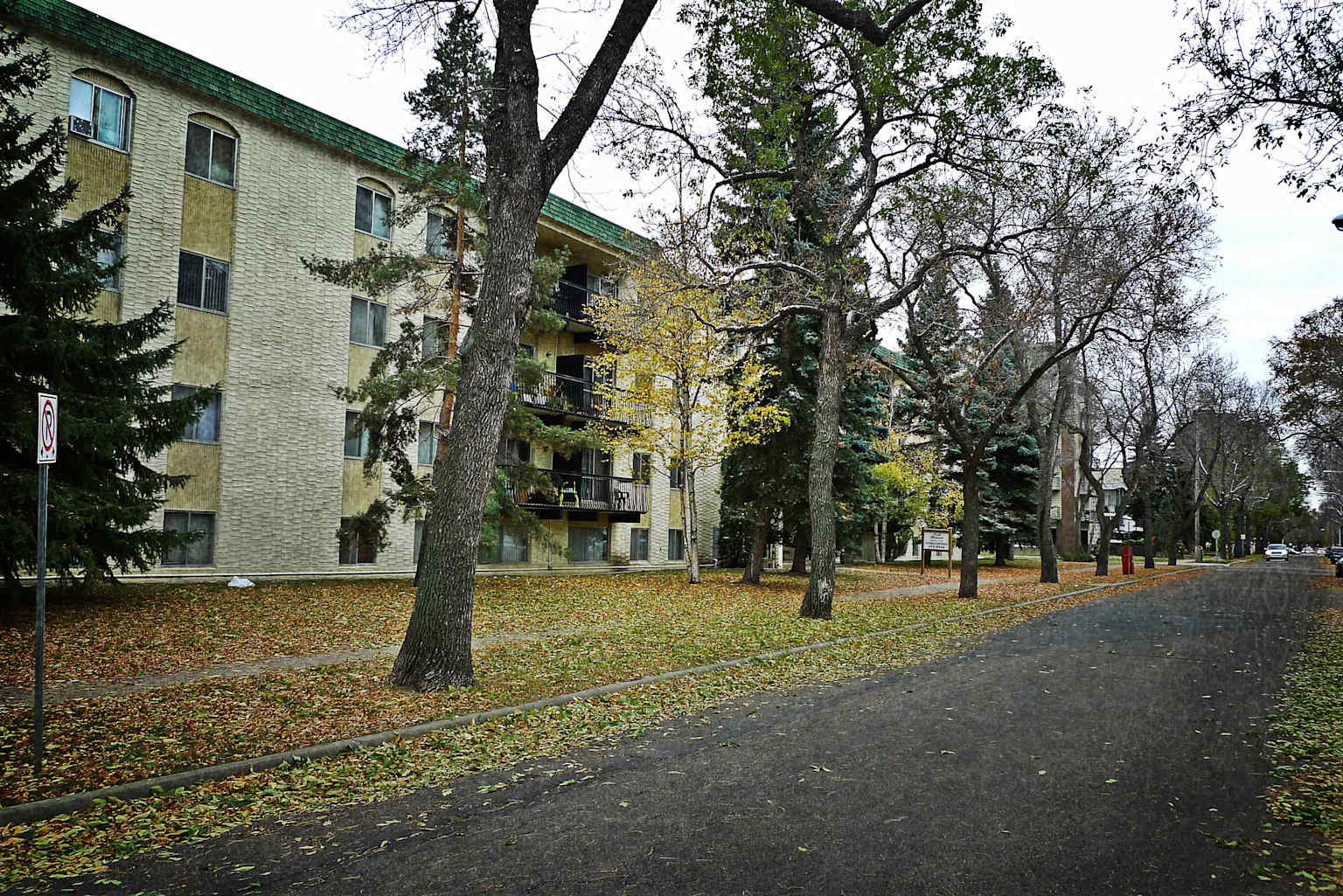 The Oliver neighbourhood — Edmonton's highest-density rental area — commands a 15–25% premium over the citywide average.
Citywide averages are useful for benchmarking, but the lived experience of Edmonton's rental market in 2026 varies enormously by neighbourhood. Here is a practical breakdown:
Downtown / Oliver
The city's highest-density rental zone. Walk-to-work convenience, Rogers Place, river valley access, and the highest concentration of purpose-built rental inventory. Downtown unfurnished 1-bedroom rents fell from $1,353/month in February 2025 to $1,249/month in February 2026 (–8%), one of the sharpest year-over-year declines in the city — a direct result of new supply. Parking adds $150–$250/month. Best suited to car-free young professionals.
Glenora / Westmount
Established, tree-lined neighbourhoods with strong professional tenant demand. Two-bedroom units range from $1,600 to $1,750, and competition for quality units in this area remains firmer than in downtown high-rises despite the citywide softening. Limited purpose-built inventory means secondary market (condos, character homes) dominates supply.
Garneau / McKernan / Bonnie Doon
The university corridor. Heavy student demand compresses September vacancy to near-zero; outside peak move-in season, rents are moderate. Basement suites: $1,100–$1,300; 2- and 3-bedroom main-floor suites: $1,800–$2,300 in sought-after blocks near Whyte Avenue. Parking is severely limited.
Windermere / Southwest Edmonton
Premium new construction draws professionals and families. South Edmonton rents remained firmer than other zones through late 2025 but saw 1-bedroom unfurnished rents dip 6% year-over-year as of February 2026, confirming that even the sought-after southwest is not immune to supply pressure. Average 1-bedroom: ~$1,298.
Mill Woods / Northeast Edmonton / Clareview
![Mill Woods rental housing Edmonton](https://pplx-res.cloudinary.com/image/upload/pplx_search_imag